


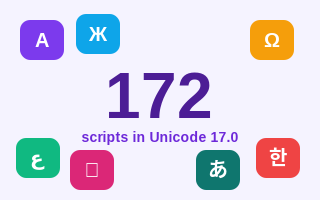
172 scripts in one standard
Unicode, the standard that lets every computer and phone show text, covered 172 writing systems in its version 17.0 of 2025, from Latin and Arabic to Baybayin and Cherokee.
Source: Unicode Consortium
Run it. Get results.
No tool matches that. Try another word.
Mathematics
Mathematics
Utilities
Utilities
Image
Image
Language
Language
Networking
Networking
Finance
Finance
Cybersecurity
Cybersecurity
Text
Text
Date
Date
Measurement
Measurement
Audio
Audio
Health
Health
Nutrition
Nutrition
Time
Time
Weather
Weather
Document Processing
Document Processing
Productivity
Productivity
Career
Career
Business
Business
Video
Video
Education
Education
Statistics
Statistics
Chemistry
Chemistry
Physics
Physics
Construction
Construction
Electrical Engineering
Electrical Engineering
Programming
Programming
Graphic Design
Graphic Design
Computer Science
Computer Science
Database
Database
Music
Music
Digital Electronics
Digital Electronics
Electronics Engineering
Electronics Engineering
Writes the same words in another alphabet without translating them. Turn Russian, Greek, Arabic, Hebrew, Hindi, Thai, Korean, Japanese or Chinese into English letters you can read out loud, or write English letters in Cyrillic, Hangul, Japanese kana, Devanagari, Baybayin and about 30 other writing systems. The meaning in English comes with each result, and you can take the text from a photo, even with your phone while you use a computer.
Writing the same words in another alphabet, letter by letter or sound by sound, without translating them: Москва becomes Moskva, not "the city of Moscow". The words stay in their language; only the letters change.
English (Latin) letters, and Amharic, Arabic, Armenian, Bengali, Burmese, Chinese characters, Georgian, Greek, Gujarati, Hebrew, Hindi and Nepali Devanagari, Japanese Hiragana and Katakana, Kannada, Khmer, Korean Hangul, Lao, Malayalam, Mongolian, Persian, Punjabi, Russian, Serbian and Ukrainian Cyrillic, Sinhala, Tamil, Telugu, Thai, Urdu and Tagalog in Baybayin.
The usual one for each language: Pinyin with tone marks for Chinese, Hepburn for Japanese, the Revised Romanization for Korean, and the common English spellings for Cyrillic, Arabic, Hindi and Thai.
Yes. Type romaji (arigatou), Pinyin (ni hao) or Russian in English letters (privet) and choose that language's script: you get ありがとう, 你好 or привет. For English words and names, it spells how they sound.
Yes: press Photo, or on a computer Use your phone and scan the code. The words in the picture are read and put in the box, then rewritten. Photos are read once and thrown away.
Many names have more than one accepted spelling in English letters (Чайковский is Tchaikovsky, Chaikovsky or Čajkovskij). The converter gives the common one; for passports and official papers, follow the spelling already on your documents.
Unicode, the standard that lets every computer and phone show text, covered 172 writing systems in its version 17.0 of 2025, from Latin and Arabic to Baybayin and Cherokee.
Source: Unicode Consortium
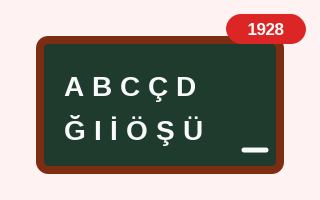
In 1928 Turkey replaced the Arabic script with a new alphabet of 29 letters based on the Latin script. After a three-month change-over it became compulsory on 1 January 1929.
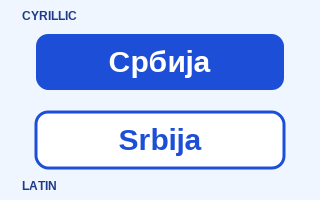
Serbian is written in both the Cyrillic and the Latin alphabets, while closely related Croatian uses only Latin, and speakers of the two understand each other.
Source: Heidelberg University
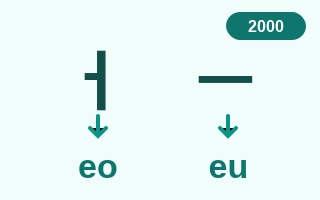
In July 2000 South Korea announced a new romanization based on how Korean sounds. It writes the vowels ㅓ and ㅡ as "eo" and "eu".
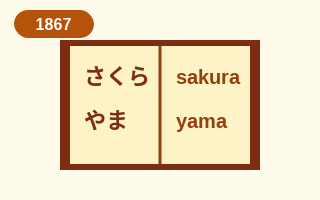
In 1867 James Curtis Hepburn published the first modern Japanese–English dictionary. The way it wrote Japanese in Latin letters became known as Hepburn romanization, still regarded as the best system for writing Japanese in Latin letters.
Source: Fine Books & Collections
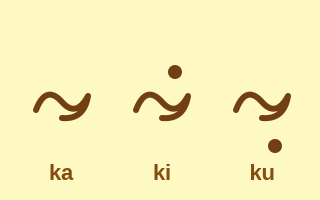
In Baybayin and the other Philippine scripts, each consonant letter carries a built-in "a" sound: vowel marks change it, and another mark cancels it. Spanish missionaries wrote about the Tagalog script as early as the mid-1500s.
Source: The Unicode Standard
Abroad, turn a sign like Выход into Vykhod so you can say it and ask for it. Its meaning (Exit) comes underneath.
You don't need a foreign keyboard: type arigatou or privet in English letters and choose Japanese (Hiragana) or Russian (Cyrillic).
One alphabet is used differently per language: Jovan is Йован in Russian but Јован in Serbian Cyrillic. Choose the language you mean.
Чайковский can be Tchaikovsky or Chaikovsky. For IDs, tickets and forms, copy the spelling already on the person's documents.
Press Photo for a menu or a sign. Hold the phone straight, close enough that the words fill the picture.
Press Use your phone, scan the code, and take the photo with the phone. The words arrive on the computer.
Press Listen on a result in another script to hear it said in its language, then repeat it.
In Pinyin, mā, má, mǎ, mà are different words; in romaji, ō is a long o. Keep the marks when you copy them.
Advertisements